
Gas supply to Jamuna Fertilizer Factory suspended indefinitely due to gas shortage
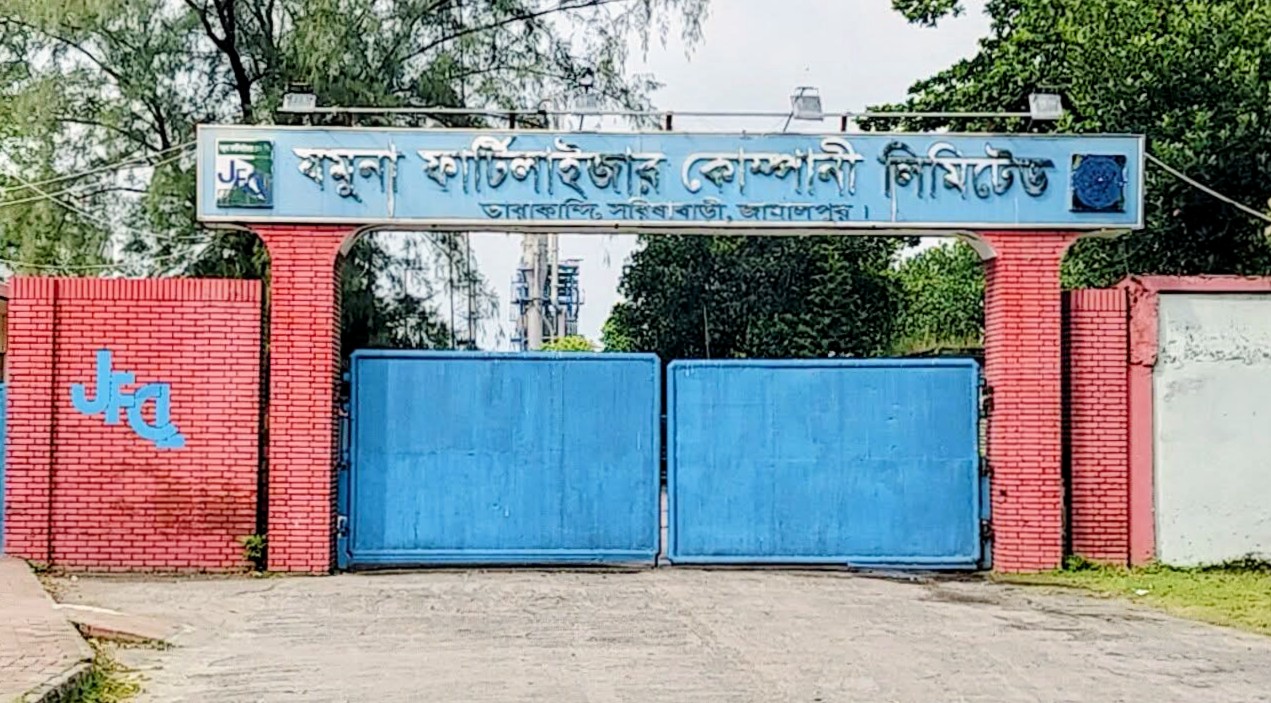
Sarishabari (Jamalpur) Correspondent:
Due to a gas shortage, Titas Gas Transmission and Distribution Company Limited has suspended gas supply to the Jamuna Fertilizer Factory—operated by the Bangladesh Chemical Industries Corporation (BCIC) and located in Tarakandi, Sarishabari Upazila, Jamalpur—for an indefinite period.
The suspension of gas supply, which took effect around 5:00 AM on Sunday (October 25), has once again brought the factory’s production operations to a halt. This was confirmed by Md. Fazlul Haque, Head of the Production Department at the Jamuna Fertilizer Factory, and Md. Dulal Mia, a senior technical staff member at the Tarakandi facility of Titas Gas Transmission and Distribution Company Limited.
According to sources at the fertilizer factory, gas supply was restored on September 21 of this year, following a seven-month shutdown. Subsequently, the factory authorities completed preparations to resume production.
After adjusting gas pressure and finalizing necessary preparations, the production of urea fertilizer began in the first week of October. Operations were later paused to carry out repairs following the discovery of a leak in a boiler. Once repairs were completed, production resumed at approximately 10:00 AM on October 23.
However, just two days after resuming operations, the factory authorities were forced to halt production once again when the gas supply to the plant was cut off at 5:00 AM on Sunday (October 25). This has created fresh uncertainty regarding the factory's production activities.
The Jamuna Fertilizer Factory is one of the largest urea fertilizer production facilities in the country. Fertilizer produced here is supplied to 19 districts, including Jamalpur, Sherpur, Mymensingh, Tangail, and Rajbari.
The factory plays a vital role in meeting the demand for urea fertilizer in the agricultural sector. Local farmers and concerned citizens fear that a prolonged suspension of production could lead to a shortage in the supply of fertilizer required by farmers. According to JFCL sources, approximately 3,196 metric tons of urea fertilizer were produced at the plant between the resumption of gas supply on September 21 and the early hours of October 25. The estimated market value of this fertilizer is around 150 million BDT (15 crore taka). During the same period, the cost of gas consumption is reported to be approximately 500 million BDT (50 crore taka).
There are concerns regarding potential financial losses, as the processes of halting and subsequently restarting production have driven up the plant's operational costs.
Factory sources indicate that maintaining normal production at the Jamuna Fertilizer Company Limited (JFCL) plant requires a daily gas supply pressure of 46 million cubic feet.
However, relevant sources note that production can still be sustained with a daily gas supply of 42 to 43 million cubic feet. Adequate gas pressure and an uninterrupted supply are essential to meet production targets and ensure the smooth operation of the facility.
The plant has a daily production target of 1,700 metric tons of urea and 1,078 metric tons of ammonia. According to JFCL sources, even without an optimal gas supply, it is possible to produce between 1,200 and 1,500 metric tons of urea daily, depending on the available gas pressure and prevailing conditions.
Established in 1990, the Jamuna Fertilizer Company Limited began commercial urea production in 1991.
The plant, constructed with technical assistance from Japan’s Mitsubishi Heavy Industries Ltd., was designed with an operational lifespan of 25 years—a period that concluded in 2015. Nevertheless, sources state that the facility remains capable of producing significant quantities of urea, provided it receives an adequate supply of gas.
The suspension of gas supply to the plant has sparked concern among local residents, farmers, and the broader community. There is apprehension that a prolonged production shutdown could lead to a shortage of urea fertilizer in the northern region of the country.
This situation threatens to negatively impact agricultural production and the ability of farmers to procure the necessary fertilizer. Under these circumstances, they have called for effective measures from the relevant authorities to ensure an uninterrupted gas supply to the Jamuna Fertilizer Factory.
Copyright © 2026 E-JOYPURHAT PRATIDIN. All rights reserved.
 প্রিন্ট করুন
 সেভ করুন